A concrete driveway can look perfectly serviceable from the street but tell a different story up close. The colour has faded, stains have become harder to remove, and the surface no longer looks as fresh as it once did. For many Canberra homeowners, the next question is straightforward: what is the best sealer for a concrete driveway?
The answer depends on the concrete itself, its existing finish, the appearance you want and the condition of the surface underneath. A penetrating sealer and an acrylic coating perform differently. Choosing between them without understanding those differences can lead to a finish that doesn’t meet your expectations.
Canberra’s climate adds another consideration. Cold winter conditions, frost exposure and strong summer sunshine all influence how an exterior concrete surface weathers.
At Spray Pave Canberra, our services include concrete cleaning and sealing, decorative finishes and driveway resurfacing. With 34 years of industry experience behind the Spray Pave network, we understand why selecting the right surface treatment starts with understanding the existing concrete.
Understanding Concrete Driveway Sealers
Concrete is exposed to more than vehicle traffic. Rain, sunlight, moisture, oil, dirt and general outdoor use gradually affect its appearance. A concrete sealer provides a protective treatment intended to reduce the impact of particular environmental and everyday contaminants. Depending on the formulation, it may also change the appearance of the surface.
There isn’t one product that suits every driveway. Some homeowners prefer to retain the natural appearance of their concrete. Others want a richer colour, a decorative sheen or a finish that complements their home’s exterior.
The main sealer categories worth understanding are:
- Penetrating sealers: Designed to enter the concrete’s pores and provide protection without creating a conventional visible surface film.
- Acrylic sealers: Form a protective coating over the surface and can change the appearance through colour enhancement and sheen.
- Other specialist coatings: Selected systems are designed for particular performance requirements, so their suitability should be checked against the manufacturer’s specifications.
The existing concrete matters just as much as the product. A plain driveway, exposed aggregate surface and coloured decorative concrete should not automatically receive the same treatment.
Penetrating Sealer vs Acrylic Sealer
This is one of the main decisions homeowners face when researching concrete driveway sealing. Both categories have a place, but they produce different results.
Penetrating concrete sealers
A penetrating sealer works within the concrete’s surface pores rather than relying on a conventional film sitting on top. This category is generally considered when retaining the original appearance is a priority.
Potential advantages include:
- Maintaining a relatively natural concrete appearance.
- Reducing water absorption when the product is suitable for the substrate.
- Providing protection without a conventional glossy surface coating.
- Avoiding some of the peeling characteristics associated with film-forming coatings.
However, penetrating products are not designed to create every type of decorative finish. They also should not be assumed to bind loose aggregate or restore damaged concrete.
Acrylic concrete sealers
Acrylic sealers create a surface film. Depending on the product, they can produce a matte, satin or glossy appearance. They are commonly considered for decorative concrete because they can enhance the existing colour and visual character of the surface.
Potential advantages include:
- Enhancing the appearance of coloured concrete.
- Creating a more noticeable decorative finish.
- Providing a protective surface layer.
- Offering different sheen options.
The downside is that film-forming products need suitable preparation and compatibility with the existing coating. Poor application or moisture problems can contribute to whitening, peeling or adhesion failure.
Which should you choose?
| Consideration | Penetrating sealer | Acrylic sealer |
|---|---|---|
| Appearance | Natural-looking | Natural to enhanced, depending on product |
| Application function | Penetrates surface pores | Forms a surface film |
| Colour enhancement | Generally limited | Available in enhanced-finish options |
| Exposed aggregate | Product-specific suitability | Specialist aggregate-compatible products available |
| Maintenance | Product-dependent | Product-dependent |
| Main consideration | Desired protection and substrate compatibility | Finish, adhesion and existing coating compatibility |
My recommendation is to start with the appearance you want and the condition of the concrete, rather than buying a product because it is marketed as suitable for all driveways. A product designed for natural-looking concrete protection is not necessarily the right choice for a coloured stencil driveway.
Choosing a Sealer for Your Driveway Type
The surface finish should influence the selection process.
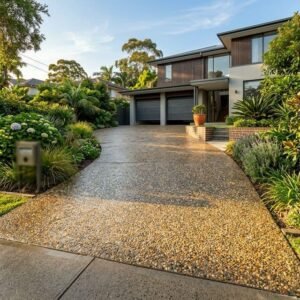
Best sealer for exposed aggregate driveway
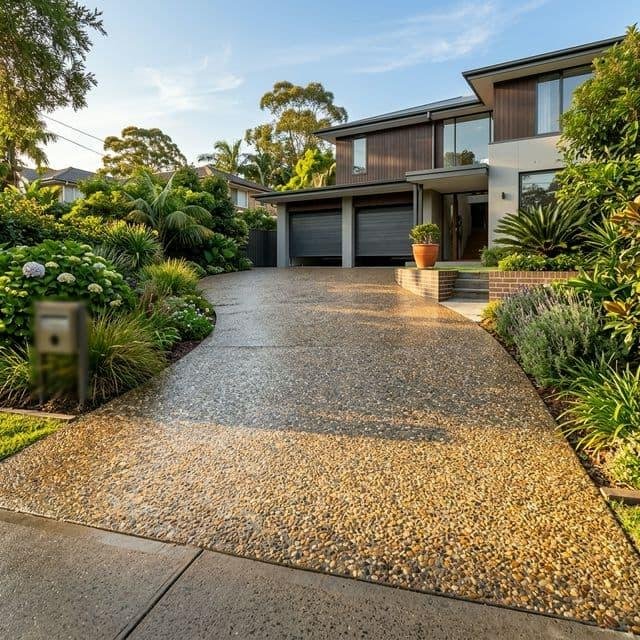
Exposed aggregate contains visible stones within the concrete surface. Its texture and appearance are a major part of its appeal. The wrong product can change the appearance more than expected.
For exposed aggregate, look for a product specifically identified by its manufacturer as suitable for exposed aggregate and exterior vehicle traffic. Acrylic aggregate sealers may enhance the stone appearance and produce a richer finish. Penetrating products may suit homeowners who prefer to preserve a more natural look.
Before choosing, consider:
- Whether you want a natural or enhanced appearance.
- Whether the existing surface has an old coating.
- Whether the product is suitable for exposed aggregate.
- Whether the finish is appropriate for vehicle traffic.
- What maintenance the manufacturer recommends.
Don’t assume that every clear concrete sealer is suitable for exposed aggregate.
Best sealer for coloured concrete driveway
Coloured concrete needs a slightly different approach. The objective is often to preserve the existing colour while providing protection against surface contamination and environmental exposure. A suitable colour-enhancing acrylic product may be worth considering when a richer appearance is desired.
However, compatibility is important. Existing coatings, previous treatments and the condition of the concrete can affect the final result. A test application and manufacturer guidance are sensible precautions before treating the entire surface.
Plain concrete driveways
For plain concrete, a penetrating sealer may be appropriate if the preference is to retain the existing appearance. Acrylic products are another option when a surface coating or sheen is preferred. The decision should be based on the actual concrete rather than assuming one category is automatically superior.
Canberra Weather and Concrete Protection
Canberra’s climate is a practical consideration when choosing a driveway treatment. The ACT experiences cool to cold winters and warm to hot summers. Frost exposure, cold overnight conditions and periods of strong summer sunshine all affect outdoor concrete.
Winter frost and moisture
During winter, moisture and cold conditions can place additional demands on exterior concrete. If water enters porous concrete and conditions become suitable for freezing, repeated freezing and thawing can contribute to deterioration. A suitable sealer may help reduce moisture absorption, but it cannot correct an already damaged slab. The existing surface condition and the manufacturer’s product suitability should be checked before application.
Summer UV exposure
Strong sunshine can contribute to fading and deterioration of some decorative finishes. For coloured and stencil-pattern concrete, selecting a product with appropriate exterior UV-resistance characteristics is worth discussing. Check the manufacturer’s technical information rather than relying on general claims about all acrylic or penetrating products.
Temperature changes
Canberra can experience substantial differences between daytime and overnight temperatures. These changes make the condition of the existing surface, coating compatibility and preparation important considerations. A sealer should never be selected solely because it performs well in another Australian city with different environmental conditions.
How to Seal a Concrete Driveway
If you’re researching how to seal a concrete driveway, preparation deserves as much attention as the product itself. Applying a coating over an unsuitable surface can produce disappointing results. Generally, professional driveway sealing involves the following considerations.
Inspect the existing concrete
Look for staining, flaking, previous coatings, surface deterioration and visible cracking. The condition of the slab should be established before deciding whether sealing is appropriate.
Clean the surface
Dirt, oil and loose contaminants can interfere with coating performance. The cleaning method needs to suit the concrete and the existing surface treatment.
Check existing coatings
This is easily overlooked. An old coating may not be compatible with the proposed product. Applying a different formulation over it without checking can result in adhesion problems.
Allow suitable drying conditions
Moisture in the concrete can affect the performance of some coating systems. The manufacturer’s requirements for surface moisture and application conditions should be followed.
Apply a suitable product
The selected product must match the surface type and intended use. Coverage, application method, coating thickness and recoating requirements are product-specific matters.
Follow maintenance guidance
Once the treatment is complete, follow the manufacturer’s instructions for cleaning, traffic and future maintenance. For professional assistance, Spray Pave Canberra provides concrete cleaning and sealing services for residential and commercial surfaces across Canberra and the ACT.
How Often Should You Seal a Concrete Driveway?
There isn’t a universal resealing schedule that applies to every concrete driveway. The appropriate maintenance interval depends on the product, surface condition, exposure and amount of traffic. A driveway exposed to regular vehicle movements and direct sunshine may experience different wear from a sheltered surface with limited use.
Rather than relying on a fixed calendar interval, watch for changes such as:
- Loss of the original finish.
- Noticeable fading or dullness.
- Peeling or flaking of an existing coating.
- Increased staining.
- Changes in how water interacts with the surface.
- Areas where the previous treatment appears to have worn away.
Check the product manufacturer’s maintenance recommendations. If the existing coating is failing, applying another layer without investigating the cause can make the problem worse.
Resurfacing or Full Concrete Replacement?
Sometimes a homeowner looking for the best concrete driveway sealer actually needs something more substantial. A faded or outdated driveway may benefit from decorative resurfacing rather than simply receiving another protective coating.
The important distinction is the condition of the existing slab.
| Consideration | Decorative resurfacing | Full concrete replacement |
|---|---|---|
| Best for | Suitable existing concrete with surface wear | Concrete that has structurally failed |
| Process overview | Existing surface is assessed, prepared and given a decorative finish | Existing failed concrete is removed and a new slab is constructed |
| Disruption level | Generally less disruptive | Generally more disruptive |
| Typical suitability | Sound concrete needing a visual upgrade | Significant structural deterioration requiring replacement |
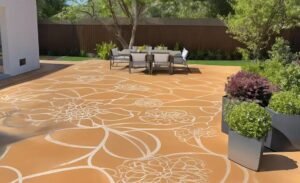
Spray Pave Canberra provides decorative driveway resurfacing for suitable existing concrete. The service includes decorative textures, stencil-style patterns, colours and other finish options. The existing driveway must first be assessed to establish whether resurfacing is appropriate.
If the concrete is structurally unsound, replacement may be necessary. A decorative coating is not a substitute for structural repairs.
Who Should Reconsider Driveway Sealing?
Not every concrete driveway should be sealed or resurfaced immediately. There are situations where the underlying problem needs attention first.
Significant structural cracking
Cracks that are widening, moving or affecting the stability of the slab require professional assessment.
Sinking or subsidence
A driveway that has dropped, settled or developed movement should not simply receive a new coating.
Drainage problems
Persistent pooling or drainage failure needs to be investigated. A sealer cannot correct an underlying drainage problem.
Tree-root damage
Where tree roots have lifted or displaced the concrete, the underlying cause needs attention before considering a surface treatment.
Severe surface deterioration
Concrete with extensive breakdown or loose material may require more than cleaning and sealing. For significant cracking, sinking or movement, obtain an assessment from a structural engineer or qualified concreter before considering resurfacing. It is better to establish whether the slab is suitable than to spend money treating a surface that has an unresolved underlying problem.
Professional Driveway Sealing in Canberra
Choosing the right sealer is only part of achieving a suitable finish. The existing concrete, previous treatments, desired appearance and intended use all need consideration. Spray Pave Canberra provides concrete cleaning and sealing services alongside decorative concrete resurfacing.
The business services residential and commercial properties across Canberra and the ACT, with its local base at Harrison. For homeowners with faded driveways, decorative concrete or worn outdoor surfaces, the team can discuss the available treatment options and whether cleaning, sealing or resurfacing is the appropriate direction.
The business also offers decorative driveway finishes for suitable existing concrete, including stencil-style patterns and different colour and texture options. If you’re considering a new surface treatment, start by having the existing concrete assessed.
Frequently Asked Questions
What is the best sealer for a concrete driveway?
There is no universally suitable product. Penetrating sealers are generally considered where a natural appearance is preferred, while acrylic products may be more suitable when colour enhancement or a decorative surface film is desired. The concrete type and existing coating must be considered.
Is penetrating sealer better than acrylic sealer?
Neither is automatically better. Penetrating sealers work within the concrete’s surface pores, while acrylic products create a surface film. The right option depends on the desired appearance, surface condition and protection requirements.
What is the best sealer for exposed aggregate?
Choose a product specifically approved for exposed aggregate and exterior vehicle traffic. Consider whether you prefer a natural appearance or enhanced colour. Compatibility with existing treatments should also be checked.
What sealer should I use on coloured concrete?
A suitable exterior colour-enhancing acrylic sealer may be appropriate where a richer finish is desired. Check UV resistance, compatibility and manufacturer instructions before selecting a product.
How often should you seal a concrete driveway?
The maintenance interval depends on the product, traffic, weather exposure and surface condition. Follow the manufacturer’s recommendations and inspect the driveway regularly for fading, coating failure and other visible changes.
How do you prepare a driveway before sealing?
Preparation generally involves assessing the concrete, removing contaminants, checking existing coatings and ensuring the surface meets the manufacturer’s moisture and application requirements.
Does concrete sealing protect against UV damage?
Some exterior concrete sealers are formulated with UV-resistance properties. However, performance varies between products. Check the manufacturer’s technical information before selecting a sealer for a sun-exposed driveway.
Can you seal a cracked concrete driveway?
Minor surface imperfections and structural cracks are different problems. Sealing does not repair structural cracking, subsidence or movement. Significant cracking should be assessed by a qualified professional before surface treatment.
Is resurfacing better than resealing an old driveway?
If the existing coating has worn away but the concrete remains suitable, resealing may be appropriate. If the driveway looks outdated and needs a decorative upgrade, resurfacing may be a better option. Structurally failed concrete requires assessment and may need replacement.
Protect Your Concrete Driveway with the Right Treatment
The best sealer for a concrete driveway depends on the surface, its existing treatment and the finish you want to achieve. A natural-looking penetrating product may suit one driveway, while an acrylic finish may be more appropriate for coloured or decorative concrete. If your Canberra driveway has faded, become stained or lost its original appearance, Spray Pave Canberra can discuss concrete cleaning, sealing and decorative resurfacing options.
With 34 years of industry experience, residential and commercial services, and Canberra-wide coverage, the team can help you determine which treatment is appropriate for your existing concrete.
Contact Spray Pave Canberra for a free quote.
Phone: 0422678349
Email: Info@spraypavecbr.com.au
Address: 58 Bungle Bungle Crescent, Harrison ACT 2914
Website: https://spraypavecbr.com.au/