Choosing the best flooring for an alfresco area means balancing appearance, slip resistance, maintenance, weather exposure and the condition of the existing surface. For Canberra homeowners, these decisions matter because an outdoor entertaining area needs to suit both the property and the local climate.
Popular alfresco flooring ideas include decorative concrete, outdoor tiles, pavers, timber decking, composite decking and natural stone. Each has different installation requirements and maintenance considerations. If your home already has a concrete patio, resurfacing may also be worth considering. Where the existing slab is suitable, a new decorative finish can refresh its appearance without automatically requiring complete replacement.
At Spray Pave Canberra, the relevant service is decorative concrete resurfacing for suitable existing surfaces. The aim of this guide is to help you understand your options before deciding which approach deserves further investigation.
Quick answer: There is no single flooring option that suits every alfresco area. Decorative concrete resurfacing is worth considering when an existing concrete slab is structurally suitable and you want to update its appearance. New construction, tiles, pavers or decking may be more appropriate in other circumstances.
Table of Contents
- What Is the Best Flooring for an Alfresco Area?
- Best Alfresco Flooring Ideas to Consider
- How to Choose Outdoor Patio Flooring
- Why Canberra Weather Matters
- Slip Resistance, Drainage and Maintenance
- Resurfacing vs Full Concrete Replacement
- Who Should Reconsider Concrete Resurfacing?
- Is Concrete Alfresco Resurfacing Right for Your Home?
- Frequently Asked Questions
What Is the Best Flooring for an Alfresco Area?
The best flooring depends on how you use the space, whether the area is covered, the condition of the existing surface and the amount of maintenance you are prepared to undertake. For example, an alfresco area used for outdoor dining may have different requirements from a poolside entertaining space exposed to frequent splashing.
Here are the main options to consider:
- Decorative concrete resurfacing: Worth considering when an existing concrete slab is suitable for a new decorative finish.
- Outdoor tiles: Suitable for homeowners who prefer a tiled appearance and can provide an appropriate substrate and installation.
- Concrete pavers: Offer modular layouts and design flexibility, with joint maintenance and installation details to consider.
- Timber decking: Can provide a natural appearance and suit some raised or elevated outdoor spaces.
- Composite decking: Offers a manufactured alternative to timber, with product-specific requirements for heat, drainage and maintenance.
- Natural stone: Provides a distinctive appearance, although material selection, sealing requirements and maintenance vary.
For homeowners considering concrete alfresco flooring, the first question is whether the existing slab can be retained.
If the concrete is structurally sound but looks faded, stained or outdated, decorative resurfacing may be a practical option. If the slab has significant structural problems, changing the surface finish alone is not the appropriate solution.
Best Alfresco Flooring Ideas to Consider
1. Decorative concrete resurfacing
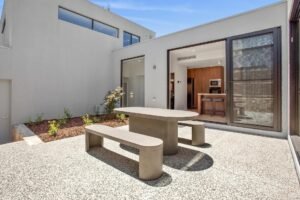
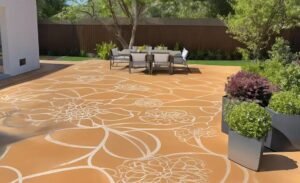
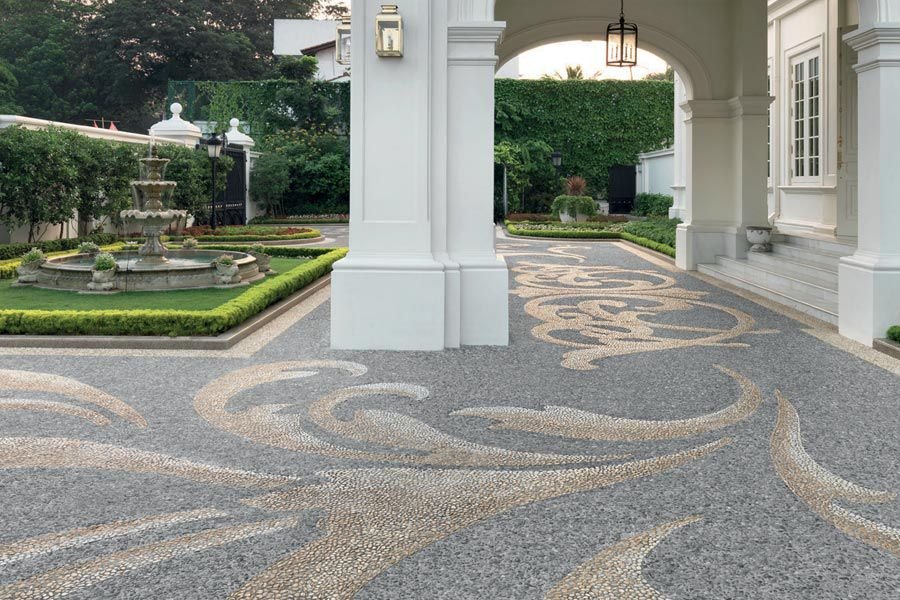
Decorative concrete resurfacing is an option for homeowners who already have a suitable concrete patio and want to update its appearance. Depending on the selected system, decorative finishes can incorporate different colours, textures and stencil patterns. This can help coordinate the outdoor floor with the home’s exterior, garden and entertaining area.
A major consideration is the condition of the existing slab. Resurfacing is intended to improve the surface, not repair structural failure. Spray Pave Canberra’s existing patio service describes decorative spray paving and stencil-style finishes for suitable concrete patios.
Best suited to: Existing concrete patios with cosmetic wear or an outdated appearance, provided the slab is suitable for resurfacing.
Important consideration: The selected finish must be appropriate for the intended use, including exposure to moisture and outdoor conditions.
2. Outdoor tiles
Outdoor tiles can create a clean, contemporary appearance and complement a home’s indoor flooring.
However, not every tile is suitable for outdoor use. Buyers should check that the product is intended for external applications and has appropriate slip-resistance characteristics for the conditions in which it will be used. Installation also matters. The substrate, falls, drainage, adhesive and jointing details must be suitable for the site.
Best suited to: Homeowners who prefer a tiled appearance and are prepared to address the installation and maintenance requirements.
Important consideration: A tile’s appearance alone does not establish its suitability for wet or exposed outdoor areas.
3. Concrete pavers
Concrete pavers offer flexibility in layout, colour and pattern. Individual units can create defined areas within a larger entertaining space. The quality of the installation depends on the base, edge restraint, levels and drainage arrangements. Joints may require maintenance, and unevenness can become a concern if the supporting surface or bedding moves.
Best suited to: Homeowners who want a modular paving pattern and are comfortable with the maintenance requirements of a jointed surface.
Important consideration: Pavers are not automatically the simplest choice for every existing slab. The proposed installation must suit the underlying conditions.
4. Timber decking
It’s creates a natural appearance and can work well where an alfresco design incorporates changes in level or a raised outdoor platform. Timber species, exposure, drainage and maintenance requirements all influence its suitability. The structure supporting the decking also needs appropriate design and construction.
Best suited to: Projects where a timber appearance or raised platform is an important part of the design.
Important consideration: Timber is not a direct substitute for resurfacing an existing concrete slab. The two approaches involve different construction requirements.
5. Composite decking
Composite decking is a manufactured alternative to timber. Products vary in composition, surface texture, appearance and installation requirements. Before selecting composite boards, review the manufacturer’s guidance on temperature, ventilation, drainage, cleaning and maintenance.
Best suited to: Homeowners who prefer a manufactured decking product and whose proposed installation is compatible with the product requirements.
Important consideration: Composite decking can become hot in direct sun, depending on the product, colour and exposure.
6. Natural stone
Natural stone can provide a distinctive appearance and complement established gardens or higher-end outdoor designs. Different stones vary in porosity, surface texture, colour consistency and maintenance requirements. Some require sealing, while others need specific cleaning methods to avoid damage.
Best suited to: Homeowners prioritising a natural material and prepared to select and maintain it appropriately.
Important consideration: Confirm that the stone and its finish are suitable for outdoor exposure and the intended traffic, particularly where the surface may become wet.
Comparing the main outdoor patio flooring options
| Flooring option | Main appeal | Maintenance considerations | Important limitation |
|---|---|---|---|
| Decorative concrete resurfacing | Refreshes suitable existing concrete with a decorative finish | Cleaning and any system-specific maintenance | Requires a suitable underlying slab |
| Outdoor tiles | Broad choice of colours and appearances | Grout, joints and surface cleaning | Requires appropriate outdoor-grade products and installation |
| Concrete pavers | Flexible patterns and layouts | Joint maintenance and levelling | Base preparation and drainage are important |
| Timber decking | Natural timber appearance | Product- and species-specific care | Requires a suitable supporting structure |
| Composite decking | Manufactured decking appearance | Follow product-specific cleaning instructions | Heat and installation requirements vary |
| Natural stone | Distinctive natural finish | Depends on stone type and sealing requirements | Suitability varies by stone and surface finish |
The most suitable choice is the one that fits your existing site, intended use, appearance preferences and maintenance expectations.
How to Choose Outdoor Patio Flooring
Before choosing between different outdoor patio flooring options, work through the following questions.
1. What surface do you already have?
If the area has an existing concrete slab, determine whether it is suitable for resurfacing before planning a replacement. If the space has no slab, or the existing surface has significant structural problems, the appropriate solution may involve new construction or replacement.
2. Is the area covered or exposed?
A covered alfresco may receive less direct rain and sunlight than an open patio. However, wind-driven rain and moisture can still affect the surface. Consider how quickly the area dries, where water collects and whether the floor will be used barefoot.
3. How much foot traffic will it receive?
Think about outdoor dining, children, pets, furniture movement and frequent entertaining. The surface should be selected for its intended use, not simply its appearance in a product photograph.
4. What level of maintenance is acceptable?
Some materials require attention to joints, sealers or timber finishes. Others may be easier to clean but still need product-specific care. Ask what routine maintenance the selected surface requires before committing to it.
5. Does the floor complement the property?
Consider the home’s exterior colours, landscaping, fencing and existing pathways. Decorative concrete can offer colour and pattern options without necessarily changing the underlying layout. Tiles, pavers and decking provide different visual and installation possibilities.
6. Is the existing concrete suitable for the proposed work?
This is particularly important when considering concrete patio resurfacing in Canberra.
Surface wear does not automatically mean a slab needs replacement. Equally, a fresh coating will not resolve structural movement or serious concrete failure. If you notice significant cracking, sinking or movement, arrange an assessment by a structural engineer or qualified concreter before deciding on resurfacing.
Why Canberra Weather Matters
Canberra’s climate should be considered when selecting alfresco flooring. Outdoor surfaces can experience cold winter conditions, frost, periods of intense summer sunlight and substantial changes between daytime and overnight temperatures. These conditions do not affect every flooring system in the same way. The outcome depends on the product, the underlying substrate, the installation and the amount of exposure.
Winter frost and freeze-thaw exposure
Moisture can enter susceptible materials and existing concrete. Under suitable conditions, repeated freezing and thawing may contribute to deterioration.
For a concrete patio, existing damage needs to be understood before a decorative coating is considered. An overlay cannot be relied upon to correct concrete that is deteriorating because of underlying problems. A suitable assessment should establish whether the slab can be retained and whether the proposed system is appropriate.
Summer UV exposure
Outdoor surfaces receive varying amounts of direct sunlight depending on their orientation, shade and surrounding structures. UV exposure can affect the appearance of some materials and finishes. When comparing options, ask about the selected product’s suitability for external use and its expected maintenance requirements.
Temperature variation
Large changes in temperature can affect materials and building components differently. The selected system, surface preparation and installation need to be appropriate for the site. This is one reason not to assume that every coating or decorative finish is suitable for every Canberra patio.
Surface colour and comfort
Dark surfaces can become hot in direct sunlight, while very light surfaces may produce uncomfortable glare in some locations. Consider the amount of shade, how the space is used and whether people will regularly walk barefoot. The practical lesson: Choose flooring for the actual conditions at your property, rather than relying on appearance alone.
Slip Resistance, Drainage and Maintenance
A successful alfresco floor needs to do more than look attractive. It also needs to suit the conditions in which people will walk on it.
Check slip resistance
Water, dirt, organic growth and cleaning residues can affect how a surface behaves underfoot. When selecting outdoor tiles, stone or a concrete coating, ask for evidence that the chosen product and finish are appropriate for the intended environment. A textured finish is not automatically suitable for every wet area, and a finish described as slip-resistant should not be interpreted as eliminating the risk of slipping.
Pool surrounds deserve particular attention because people may walk on them with wet feet.
Understand drainage
Drainage is a separate issue from surface texture. If water regularly pools on an alfresco floor, investigate why it happens before selecting a new finish. The issue may relate to the existing falls, drainage provisions or surrounding levels. Resurfacing should not be represented as a solution to a drainage failure. The underlying problem may need to be corrected first.
Plan for maintenance
Before choosing a flooring system, ask:
- How should it be cleaned?
- Does it require periodic sealing?
- Are there restrictions on cleaning products?
- How should stains or surface contamination be handled?
- What maintenance does the manufacturer recommend?
For concrete resurfacing, follow the guidance supplied for the selected system.
Routine maintenance can help preserve appearance, but no finish should be presented as maintenance-free without evidence.
Consider how the area will be used
A family dining area, an exposed entertaining patio and a poolside surface have different practical demands. If the space is used regularly in wet conditions, prioritise suitability and appropriate slip resistance over decorative appearance alone.
Resurfacing vs Full Concrete Replacement
When an existing concrete alfresco floor looks tired, replacement is not automatically the only option.
Concrete resurfacing involves preparing suitable existing concrete and applying a new surface system. Full replacement involves removing the existing slab and constructing a replacement.
The appropriate approach depends on the condition of the concrete, the cause of any damage and the requirements of the proposed finished floor.
Comparing resurfacing and replacement
| Consideration | Decorative concrete resurfacing | Full concrete replacement |
|---|---|---|
| Best for | Structurally suitable concrete with cosmetic wear | Slabs that require replacement or a substantially different underlying construction |
| Process overview | Assess the slab, prepare the surface and apply a suitable decorative system | Remove the existing slab as required, address the underlying construction and install new concrete |
| Disruption level | Generally involves less demolition when the existing slab can be retained | Generally involves more demolition and construction |
| Typical suitability | Faded, stained or outdated concrete that remains suitable for resurfacing | Significant slab failure, unsuitable existing construction or a need to rebuild the surface |
| Main limitation | Does not resolve structural failure or underlying drainage problems | Requires a more extensive construction process and assessment of the site |
Free quote: call 0422678349 for a resurfacing assessment.
Free quote: call 0422678349 to discuss whether resurfacing may be suitable for your existing concrete.
When resurfacing may be appropriate
Decorative resurfacing may be worth investigating if your patio has:
- Faded or discoloured concrete.
- Surface staining.
- An outdated decorative appearance.
- Cosmetic wear from ordinary use.
- A sound existing slab that could benefit from a new finish.
The final decision should follow an assessment of the existing surface.
Spray Pave Canberra’s patio resurfacing service explains the company’s approach to assessing suitable concrete and considering decorative finishes.
When replacement may be more appropriate
Replacement or other remedial work may be necessary where the underlying slab has significant structural problems, substantial movement or deterioration that makes it unsuitable for resurfacing. A new surface finish should never be used to conceal a problem that requires proper assessment. If you are uncertain about the condition of your patio, obtain professional advice before deciding between the two options.
Who Should Reconsider Concrete Resurfacing?
Concrete resurfacing can be useful, but it is not suitable for every slab. Some conditions should prompt a homeowner to pause before requesting a decorative finish.
1. Concrete with significant structural cracking
Not every crack indicates structural failure, but significant cracking deserves attention. Cracks that are widening, associated with movement or accompanied by other signs of deterioration should be assessed before resurfacing is considered. A new coating does not repair the underlying structural cause.
2. A slab that is sinking or moving
Uneven levels, settlement and visible movement may indicate problems beneath the concrete or within the slab itself. Resurfacing will not correct subsidence or stabilise a moving slab. Arrange an assessment by a structural engineer or qualified concreter before proceeding.
3. Severe drainage problems
If water repeatedly collects against the house, pools across the patio or flows in the wrong direction, the cause needs to be investigated. A decorative coating is not a substitute for correcting drainage or level problems.
4. Active tree-root damage
Tree roots can contribute to lifting, displacement or cracking in concrete. Where roots are actively affecting the slab, the underlying cause needs to be assessed before choosing a surface treatment.
5. Extensive deterioration
Concrete that is breaking apart, severely deteriorated or otherwise unsuitable for a coating may require more substantial work. An on-site assessment can help establish which options are appropriate.
The rule is simple: assess the concrete before selecting the finish. Resurfacing is intended to improve a suitable surface, not to replace structural repairs.
Is Concrete Alfresco Resurfacing Right for Your Home?
If you already have a concrete alfresco area, resurfacing may be worth considering before committing to full replacement. The key questions are whether the existing slab is suitable, which decorative finish meets your needs and how the area will be used. Spray Pave Canberra provides decorative concrete resurfacing for residential and commercial properties throughout Canberra and the ACT.
Its existing patio service describes decorative spray paving and stencil-style finishes for suitable concrete. These options can help homeowners explore different appearances while retaining the existing slab where appropriate.
What to discuss when requesting a quote
It is useful to explain:
- Where the patio is located.
- Whether the area is covered or exposed.
- What condition the existing concrete is in.
- Whether you have noticed cracking, movement or water pooling.
- What appearance you want to achieve.
- How the area will be used.
These details help establish what needs to be assessed and which options may be worth discussing.
A local option for Canberra homeowners
Spray Pave Canberra is based at 58 Bungle Bungle Crescent, Harrison ACT 2914 and services Canberra and surrounding ACT areas.
You can explore the company’s patio resurfacing service for more information about decorative concrete finishes and suitability.
For a free quote, call 0422678349 or email Info@spraypavecbr.com.au.
The team can discuss your project and the next steps for assessing your existing concrete.
Frequently Asked Questions
1. What is the best flooring for an alfresco area?
The best flooring depends on the existing surface, weather exposure, intended use, maintenance requirements and preferred appearance.
Decorative concrete resurfacing may suit an existing concrete patio that remains structurally sound. Outdoor tiles, pavers, timber decking, composite decking and natural stone are other options, each with different installation requirements. Compare suitability and maintenance before making a decision.
2. Is concrete resurfacing suitable for an existing patio?
It may be suitable if the existing concrete is structurally sound and appropriate for the selected resurfacing system. Faded colour, staining and cosmetic wear do not necessarily mean a slab must be replaced. However, significant cracking, movement, sinking or extensive deterioration requires professional assessment before resurfacing is considered.
3. Is decorative concrete suitable for Canberra’s climate?
Decorative concrete systems can be considered for outdoor areas in Canberra, but suitability depends on the particular system, the underlying concrete, installation conditions and exposure. Winter frost, summer UV and temperature variation should be considered when selecting the finish. Ask the contractor to assess the slab and confirm that the proposed system is appropriate for the location.
4. What flooring is suitable for a wet outdoor area?
The answer depends on how much water reaches the area, how quickly it drains, the surface texture and how people use the space. Outdoor tiles and decorative concrete finishes should be selected for their suitability for wet conditions. Around pools, appropriate slip resistance is especially important. No surface can eliminate every slipping risk, so maintenance and cleaning also matter.
5. Can I resurface cracked concrete?
It depends on the nature and extent of the cracking and the condition of the underlying slab. Minor surface imperfections may be addressed as part of suitable preparation, but resurfacing cannot repair structural failure, subsidence or active movement. If the slab has significant cracks or other signs of movement, arrange an assessment by a structural engineer or qualified concreter before considering a coating.
6. Is resurfacing better than replacing a concrete patio?
Neither option is automatically better for every property.
Resurfacing may be appropriate when the existing slab is suitable and the goal is to improve its appearance. Replacement may be necessary when the slab has significant structural problems or the existing construction is unsuitable. The correct decision depends on the site’s condition and the work required.
7. How do I maintain decorative concrete alfresco flooring?
Follow the maintenance instructions for the selected resurfacing system. In general, keep the surface clean, remove contamination appropriately and address maintenance requirements identified by the contractor or product manufacturer. Avoid assuming that every decorative finish uses the same cleaning products or sealing schedule.
8. How do I request an alfresco concrete resurfacing quote in Canberra?
Contact Spray Pave Canberra to discuss your patio and whether the existing concrete may be suitable for resurfacing.
Call 0422678349 or email Info@spraypavecbr.com.au to request a free quote.
Providing details about the location, existing surface, visible damage and preferred finish will help explain your requirements.
Conclusion: Choose Alfresco Flooring That Suits Your Property
The best flooring for an alfresco area is the option that balances appearance, maintenance, safety and suitability for the existing site. Tiles, pavers, decking and natural stone all offer different advantages. If you already have concrete, decorative resurfacing may provide another option when the underlying slab is suitable. For Canberra homeowners, it is important to consider weather exposure, drainage, slip resistance and the condition of the existing surface before selecting a finish.
If your patio looks faded, stained or outdated, Spray Pave Canberra can discuss your concrete resurfacing options and provide a free quote.
Call 0422678349 or email Info@spraypavecbr.com.au to discuss your alfresco flooring project.